
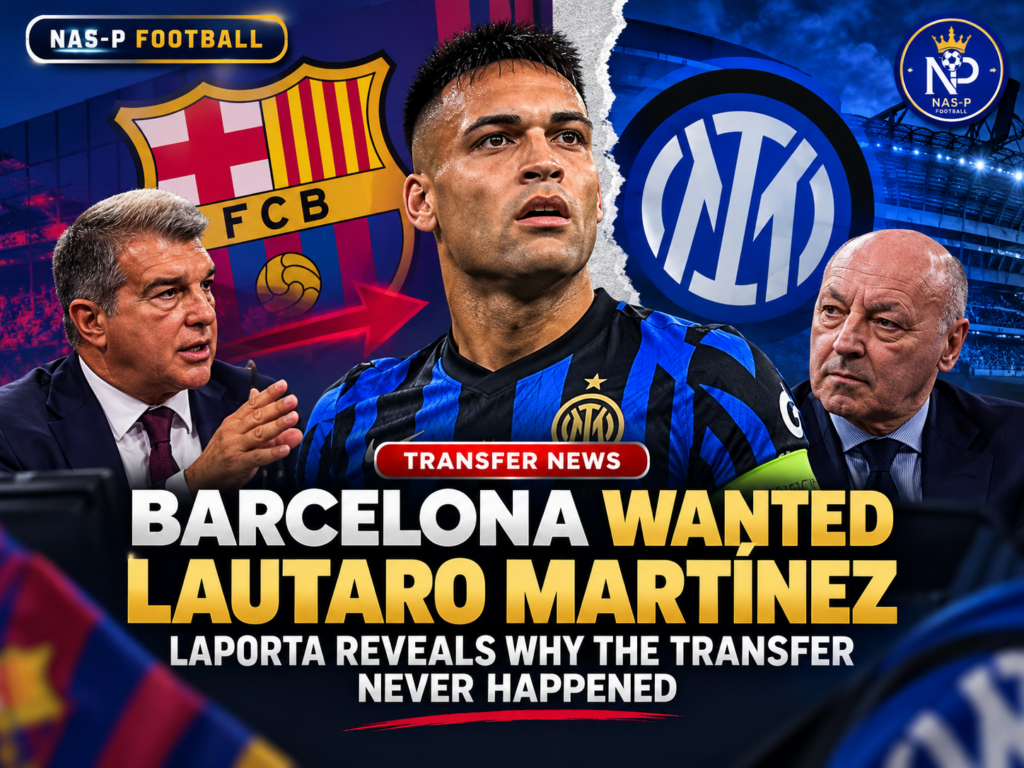
The Barcelona Lautaro Martinez transfer story was one of the most intriguing rumours of the summer, but we now know there was much more behind it than speculation.
Barcelona president Joan Laporta has confirmed that the club approached Inter Milan about captain Lautaro Martínez during the summer transfer window — and that he personally contacted Inter president Giuseppe Marotta to explore whether a deal was possible.
The answer was immediate: Lautaro was not for sale.
That ended Barcelona’s pursuit before it could develop into a full transfer negotiation.
It also gives us a clearer picture of what was happening behind the scenes as Barcelona searched for a new centre-forward following Robert Lewandowski’s departure.
Barcelona’s Interest in Lautaro Was Real
Lautaro’s name appearing alongside Barcelona was easy to dismiss as another transfer-window rumour.
We now know otherwise.
Speaking to Corriere dello Sport, Laporta confirmed that he contacted Marotta directly about the Argentine striker.
Laporta described Lautaro as an exceptional player and made clear just how highly Barcelona rated him.
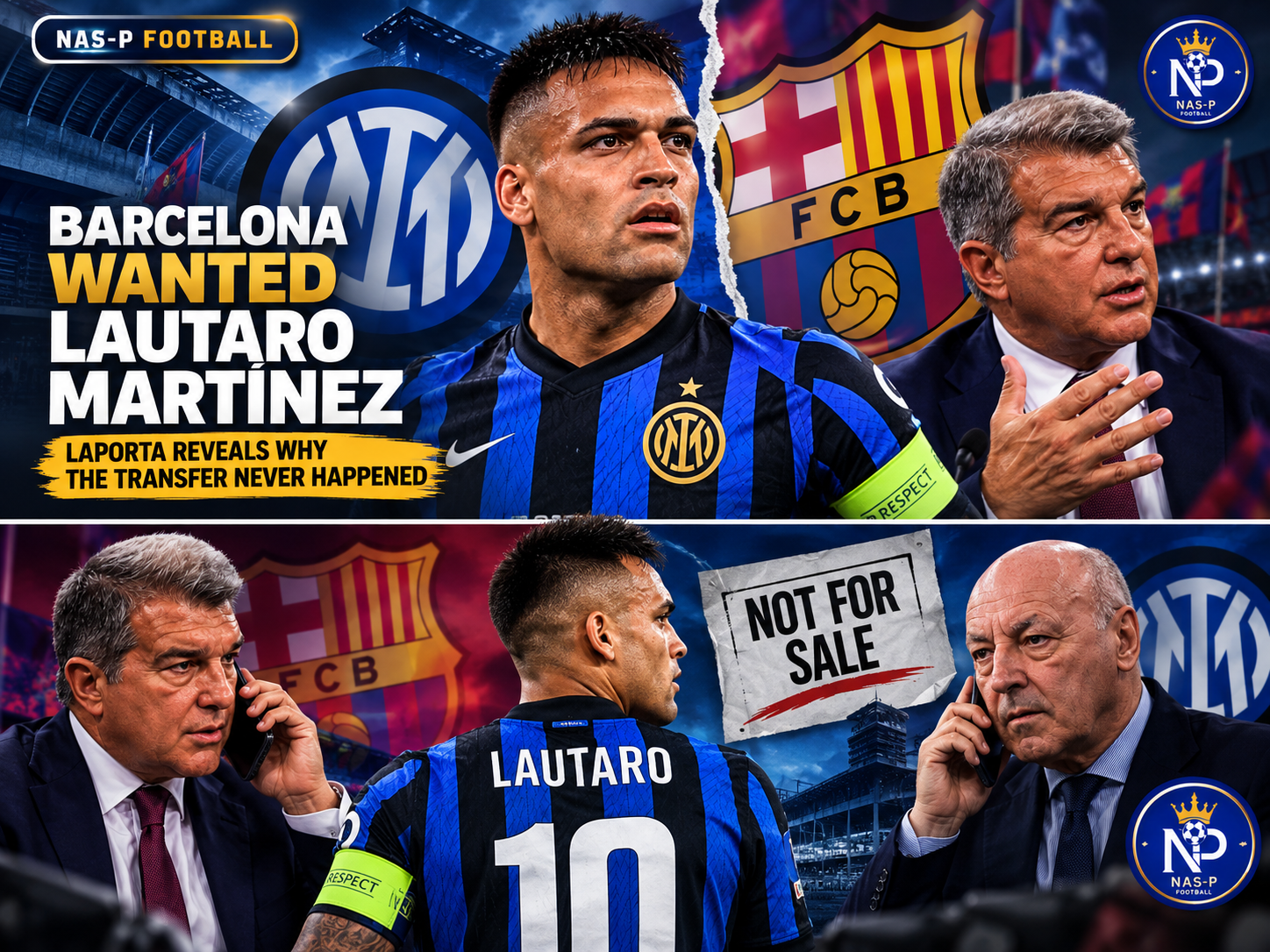
Marotta’s response, however, left little room for negotiation.
According to Laporta, the Inter president made it clear that the club’s captain was simply not available for transfer.
Rather than push the situation further, Barcelona stopped.
Laporta explained that Inter wanted to keep Lautaro and said his respect for Marotta also influenced Barcelona’s decision not to pursue the matter further.
Deco Had Already Confirmed the Interest
Laporta’s comments aren’t the only confirmation that Barcelona seriously considered Lautaro.
Sporting director Deco had already discussed the club’s striker search at the Portugal Football Summit.
Deco confirmed that Lautaro was among the forwards Barcelona considered, but said the club stopped once Inter communicated that their captain wasn’t available.
Importantly, Barcelona did not then attempt to negotiate with Lautaro behind Inter’s back.
That gives the story a very different shape from the usual transfer saga.
There was genuine interest and contact between the clubs. But there was never a prolonged negotiation because Inter refused to open the door.
Where Did Julián Álvarez Fit Into Barcelona’s Plans?
Lautaro wasn’t the only Argentine striker on Barcelona’s radar.
Julián Álvarez was another major target during the summer as Barcelona looked for a new No. 9. Atlético Madrid were equally unwilling to lose their striker, and Barcelona’s pursuit ultimately went nowhere.
Deco has since made Barcelona’s current position on Álvarez clear, saying the unsuccessful pursuit belongs in the past.
Barcelona therefore found themselves looking at elite forwards whose clubs had little interest in selling them.
That distinction matters.
This wasn’t simply a case of choosing between two available strikers. Barcelona were exploring ambitious options, but neither Inter nor Atlético were prepared to make their forwards available.
That made the search considerably more difficult.
Why Lautaro Made Sense for Barcelona
It isn’t difficult to understand Barcelona’s interest.
Lautaro has become one of Inter’s most important players and wears the captain’s armband. Beyond his goals, his movement, pressing and ability to combine with teammates make him the kind of forward who could potentially fit into a possession-heavy Barcelona attack.
But those same qualities help explain why Inter were unwilling to negotiate.
Replacing an important striker is difficult enough. Replacing your captain and one of the central figures in the team is another problem entirely.
Barcelona may have wanted Lautaro, but wanting a player and having a realistic route to signing him are two very different things.
Inter made sure the second part never developed.
Barcelona Found a Different Solution

Missing out on Lautaro and Álvarez could have left Barcelona with a significant problem after Lewandowski’s departure.
Instead, Hansi Flick has found an unexpected solution inside his squad.
Raphinha’s move into a more central attacking role has produced an extraordinary start to the season. As of September 24, Reuters reported that the Brazilian had scored 14 goals in eight matches across competitions, including 12 in La Liga.
Barcelona also strengthened their attacking options by signing Gabriel Jesus from Arsenal on September 1.
Deco acknowledged that even Barcelona did not expect Raphinha’s adaptation to the central role to work quite as spectacularly as it has.
That success changes the conversation.
Barcelona spent the summer looking outside the club for another centre-forward solution. Their early-season performances have given them less reason to panic about the position now.
Could the Barcelona Lautaro Martinez Transfer Be Revived?
This is where transfer stories can easily run ahead of the evidence.
Laporta confirming Barcelona wanted Lautaro does not mean another move is coming.
His comments primarily explain what happened during the summer.
Inter’s position was clear enough for Barcelona to abandon the pursuit, while Deco has spoken about moving forward from the club’s unsuccessful attempts to sign other strikers.
Unless Inter’s position changes, there is currently little evidence to suggest Barcelona have an easier route to Lautaro now than they did during the summer.
And with Raphinha thriving centrally and Gabriel Jesus now part of the squad, Barcelona have more attacking flexibility than they expected to have.
What Laporta’s Revelation Actually Tells Us
The most interesting part of this story isn’t simply that Barcelona liked Lautaro Martínez.
Big clubs admire elite players all the time.
What’s significant about the Barcelona Lautaro Martinez transfer story is that the club’s interest went beyond scouting reports and rumours.
Inter’s answer ended the conversation.
For Barcelona, the summer striker search ultimately produced a different solution from the one they originally imagined. For Inter, keeping their captain was apparently never up for serious discussion.
And for Lautaro, a Barcelona move that generated plenty of headlines never got far enough to become a genuine negotiation.
Sometimes the biggest transfer stories are defined not by the deal that gets completed, but by the phone call that ends one before it can even begin.