
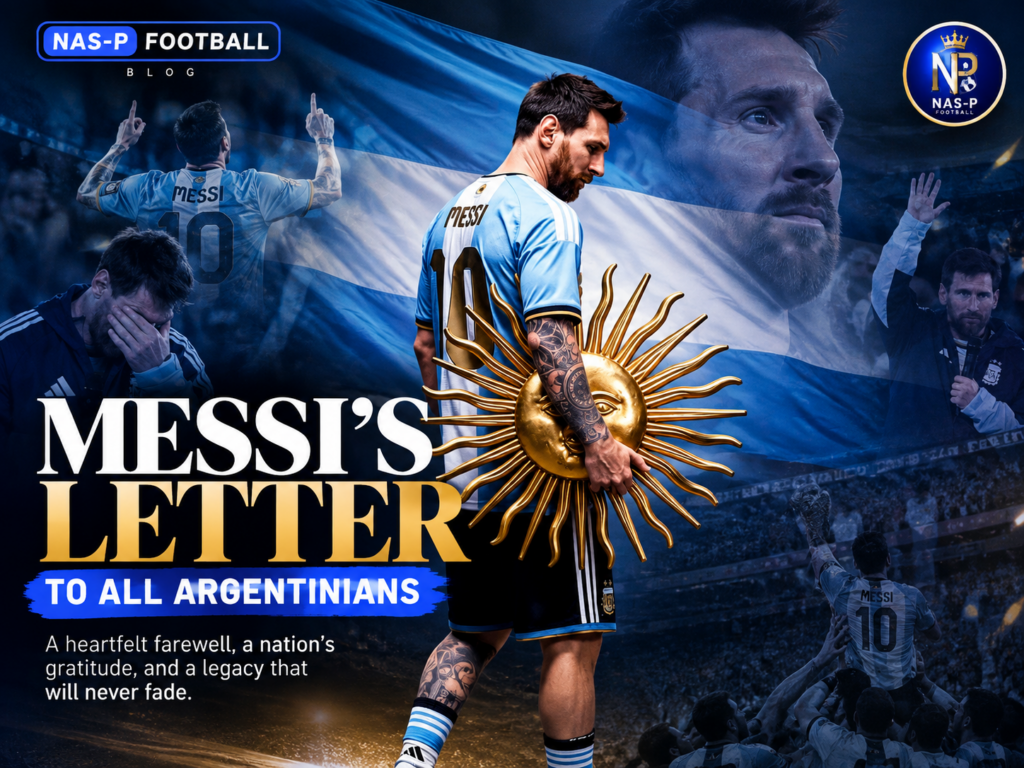
Messi Argentina farewell ended exactly as his relationship with the national team had eventually become: emotional, successful and impossible to separate from everything that came before it.
At a packed Monumental in Buenos Aires, Argentina beat Benin 3–0 in a friendly on 6 October 2026. Messi provided the corner for Nicolás Otamendi’s opener, assisted Argentina’s second goal for Nico Paz and then scored the third from the penalty spot.
It was Messi’s 126th international goal in his 208th and final appearance for Argentina.
But the football quickly became secondary to the farewell.
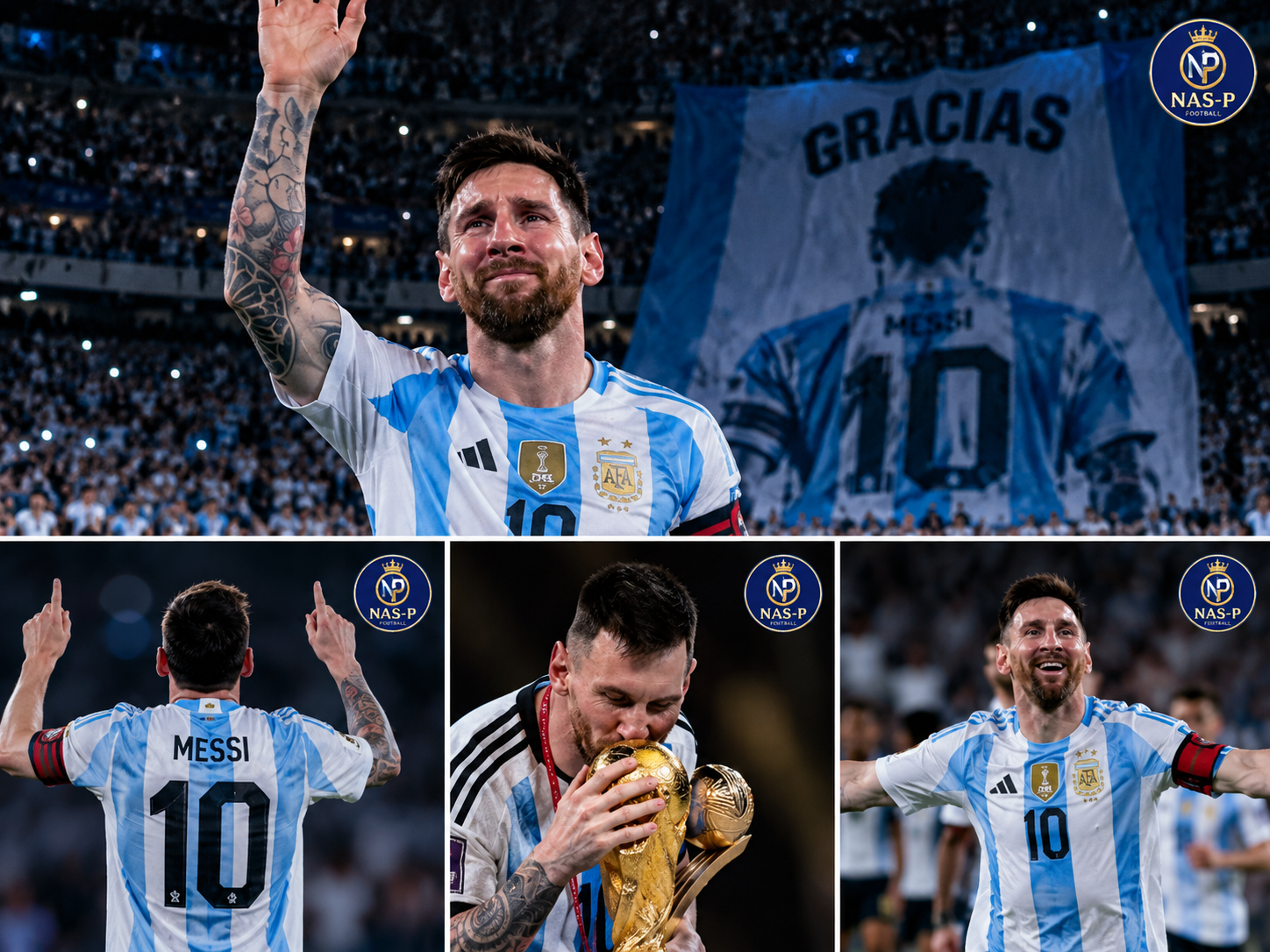
More than 85,000 supporters watched Messi say goodbye to the blue and white after more than two decades. His family and former World Cup winners were present. A giant “Gracias” No. 10 shirt had been displayed in Rosario, while fireworks and drones helped turn the Monumental into a celebration of his international career.
Messi left the pitch in tears.
Afterwards, he admitted how difficult the separation would be, saying, in comments translated from Spanish, that “not coming anymore is going to hurt a lot.”
This was not the moment Messi announced his international retirement. That decision had already come on 31 August, weeks after Argentina’s World Cup final defeat to Spain.
In that retirement message, Messi wrote that he had always loved being part of the national team. The farewell against Benin gave him something different: one final opportunity to wear the shirt in front of Argentina supporters.
The occasion also came during a deeply emotional period in Messi’s life following the recent death of his father, Jorge.
And this was an international retirement, not a retirement from professional football. Messi remains contracted to Inter Miami through the 2028 MLS season.
The importance of the farewell, then, was not simply that one of football’s greatest players had stopped playing for his country.
It was that Argentina had learned how to say goodbye to him with gratitude.
Argentina and Messi Were Not Always a Love Story
Messi arrived in the Argentina set-up carrying a strange burden.
He was Argentina’s most talented player, but he had developed largely in Spain and built his club legend at Barcelona. For some supporters, that created a distance between the footballer dominating Europe and the expectations surrounding Argentina’s national team.
The comparisons with Diego Maradona made the situation even heavier.
Maradona was not only a World Cup-winning captain. He was a national personality whose relationship with Argentina felt immediate and emotional. Messi was quieter and repeatedly judged against the almost impossible memory of Mexico 1986.
At Barcelona, Messi collected trophies and produced performances that made normal standards look inadequate.
With Argentina, however, the major tournament story was for years defined by near misses.
He lost the 2014 World Cup final to Germany before suffering defeats in the 2015 and 2016 Copa América finals against Chile.
Those losses were not Messi’s responsibility alone. Football does not work that way.
Yet much of the national team’s frustration was directed towards him because he was the player expected to change the outcome. The criticism went beyond missed chances and lost finals. Questions were raised about his personality, his leadership and whether he felt the same connection to Argentina that supporters expected.
That criticism was often unfair, but it became part of his international story.
The 2016 Breaking Point
After Argentina lost the 2016 Copa América Centenario final to Chile on penalties, Messi announced that he was retiring from international football.
He had missed in the shootout, and the decision arrived amid exhaustion and another painful final defeat.
It became one of the defining moments of his Argentina career.
Messi had helped take the country to another final, yet another defeat intensified the feeling that something was missing between Argentina, its greatest player and the trophies everyone expected him to deliver.
Then came the calls for him to return.
His eventual comeback did not immediately solve everything. Argentina still had to rebuild, and Messi still had to carry the enormous expectations attached to the shirt.
But that brief retirement became an important part of everything that followed.
Without the pain of 2016, the triumphs that eventually arrived would not have carried quite the same emotional weight.
The Trophy That Changed Everything
The 2021 Copa América was not just another trophy in Messi’s collection.
It changed the conversation surrounding his international career.
Argentina beat Brazil 1–0 in the final at the Maracanã, giving Messi his first senior international title.
For years, the absence of a major senior trophy with Argentina had been used as the easiest argument against his international legacy. Winning the Copa América removed that burden.
Messi did not suddenly become a different footballer because Argentina had won a final.
What changed was the story around him.
The years of carrying Argentina through disappointment could now be viewed alongside success rather than through the absence of it.
The 2022 Finalissima victory over Italy added another trophy, but something more important had changed psychologically.
Argentina increasingly looked like a team built around Messi rather than a team simply waiting for Messi to rescue it.
From Copa América Champion to World Champion
Qatar 2022 completed the part of Messi’s story that had always been used to measure him.
Argentina lost their opening match to Saudi Arabia and suddenly found themselves under enormous pressure.
They recovered.
Messi scored, created and led as Argentina grew stronger through the tournament. In the final against France, he scored twice before converting his penalty in the shootout.
Then came the image that had been missing from his career: Lionel Messi lifting the World Cup as Argentina captain.
The trophy did not erase the losses of 2014, 2015 or 2016.
It gave them context.
Messi’s international legacy was no longer an unfinished comparison with Maradona. It had become its own story — one of a player who endured the criticism, briefly walked away, returned and eventually led Argentina to the biggest prize in international football.
Argentina followed that triumph by winning another Copa América in 2024.
By the time Messi reached the 2026 World Cup, his relationship with the country had already been transformed.
Argentina reached another World Cup final but lost 1–0 to Spain after extra time.
There would be no second consecutive World Cup.
But unlike the defeats of Messi’s earlier years, this one could no longer define his relationship with Argentina.
He was no longer leaving as the player accused of failing to deliver.
He was leaving as a World Cup-winning captain.
The Final Chapter
Messi formally announced his international retirement on 31 August 2026.
The decision could easily have made the World Cup final his last appearance in an Argentina shirt.
Instead, he was invited back for one final farewell.
That is what made the Benin friendly — and the Messi Argentina farewell surrounding it — different.
Argentina supporters were given an opportunity to celebrate the entire journey rather than allow the last image of Messi’s international career to be a World Cup final defeat.
And Messi still shaped the football.
He helped create the opening goal for Otamendi, set up Nico Paz for Argentina’s second and scored from the penalty spot himself.
It was one goal and two assists on his final night.
Otamendi was also saying goodbye to international football, adding another layer of emotion to the occasion.
Speaking afterwards, Otamendi described the night in Spanish as a “broche increíble” — an incredible finale. He explained that the match felt like an unexpected bonus for his own international career and that Messi had encouraged him to return and enjoy the farewell.
Two veterans of Argentina’s most successful modern era were leaving together.
But inevitably, most eyes were on No. 10.
Argentina had already experienced the shock of Messi walking away once in 2016.
Ten years later, the country finally had the opportunity to thank him properly.
Why the Messi Argentina Farewell Matters
Messi once walked away from Argentina during a period when he felt unable to give the country what it demanded.
Years later, he leaves after winning the trophies that had once defined the criticism around him.
That is why this farewell matters more than the 3–0 scoreline.
It closed one of international football’s most complicated relationships without pretending the difficult years never happened.
Messi’s relationship with Argentina had to survive suspicion, frustration, lost finals and even a retirement announcement.
Then came the return.
Then the Copa América.
Then the World Cup.
And eventually came the recognition that Messi’s quieter personality had never meant a lack of commitment to the shirt.
Against Benin, the tears, teammates, supporters and celebrations represented more than one final match.
They represented how much the relationship had changed.
What Comes Next for Argentina?
Argentina now has to build without its captain, most-capped player and record goalscorer.
Messi’s departure also arrives during a period when the demands and structure of international football are increasingly being debated.
The challenge should not be finding another Messi.
That would be an impossible and potentially damaging standard for whoever comes next.
Instead, Argentina must preserve the confidence, standards and collective identity that developed during the successful final years of Messi’s international career.
Lionel Scaloni’s emerging generation will carry greater responsibility.
Players such as Nico Paz, Franco Mastantuono, Julián Álvarez, Lautaro Martínez, Alexis Mac Allister and Enzo Fernández will increasingly shape what comes next.
They deserve the opportunity to do that without every performance being measured against Messi.
As for Messi himself, the international chapter is closed.
His club career with Inter Miami continues, and there has been no announcement that he is retiring from professional football.
Argentina spent years asking Messi to prove that he belonged to them.
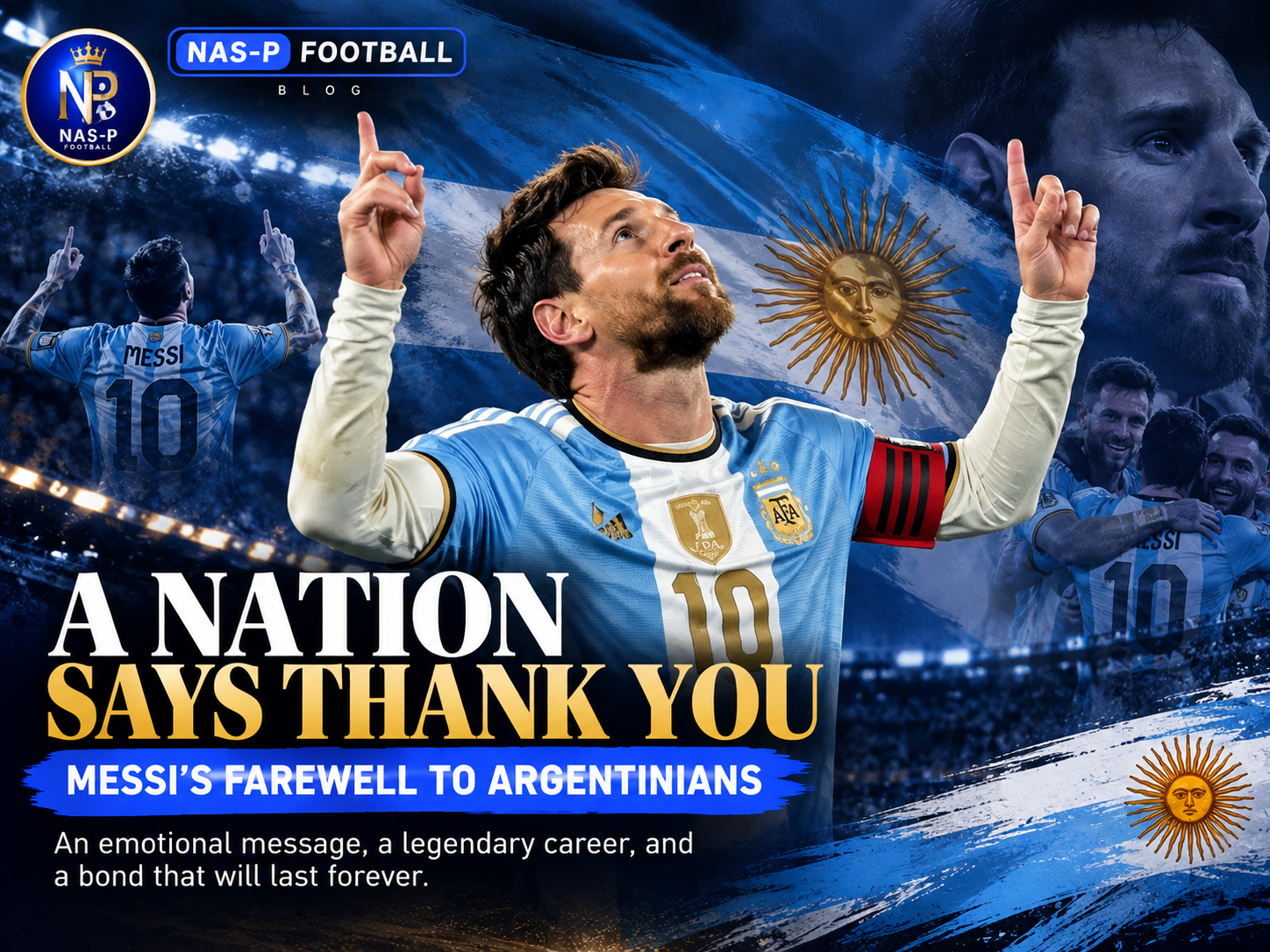
On his final night, it finally stopped asking and simply said thank you.
More NAS-P Football opinion and analysis